Why the Sector Needs a 10 Year Revisit of the Landmark 2016 Nonprofit Merger Study
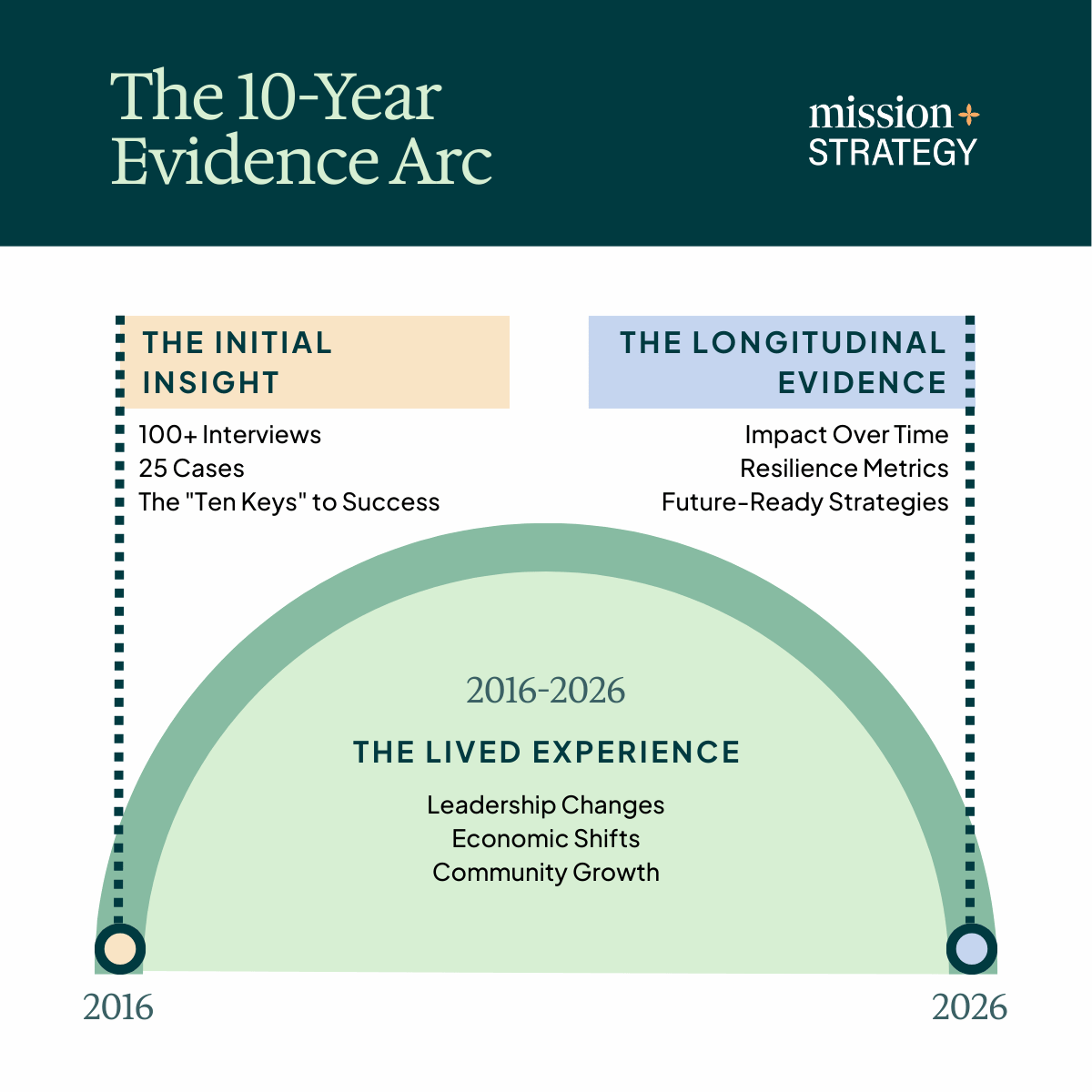
Ten years ago, the Mergers as a Strategy for Success study offered the Chicago nonprofit sector something it had not had before: a clear and evidence-based view into how organizations approach nonprofit mergers. It was the first research of its kind in the region. It drew on more than 100 interviews and 25 real merger cases to illuminate not only the mechanics of consolidation but also the human dynamics that most often shape the outcome.
A decade later, the environment around nonprofit organizations has shifted dramatically. The pressures are different; the operating landscape is more demanding and leaders continue to navigate uncertainty with limited time and resources. What remains constant is the need for clarity, trusted information and a grounded understanding of what helps organizations endure change.
In 2026, Mission + Strategy is revisiting those original 25 mergers through a comprehensive nonprofit longitudinal study. This will examine what has happened to those organizations over the past ten years, how their merged structures influenced their ability to fulfill their missions and what the sector can learn as it looks ahead. This revisit is not simply a follow up; it is a needed moment for reflection and learning at a time when nonprofit leaders are being asked to make complex decisions with far reaching implications.
Why the 2016 Study Became a Sector Cornerstone
The 2016 study filled a major gap in nonprofit literature. While corporate mergers are studied routinely, nonprofit leaders have had access to very little detailed or long-term data to guide decisions about strategic restructuring. Before 2016, most assumptions about nonprofit mergers were shaped by anecdotes or misperceptions.
The study helped change that. Among its findings:
88 percent of participants believed their organization was better off post-merger in mission impact or financial stability.
Most mergers were motivated by mission-oriented growth rather than financial crisis.
Culture and trust emerged as the central factors in successful integration.
These insights gave boards and executives a more grounded way to think about collaboration. What the original study could not answer was how these mergers played out over time. A merger that looks promising after two years may evolve in unexpected ways as leadership changes or funding shifts. The 2026 revisit aims to answer those long-term questions.

Why This Moment Demands a Longitudinal Look at Mergers
Since 2016, the conditions surrounding nonprofit organizations have changed significantly.
Financial and Workforce Strain
Nonprofits continue to face financial fragility. Funding has not kept pace with rising operational costs and increased demand for services. Yet the field still has little evidence about whether mergers make organizations more resilient over time.
Shifts in Funding Priorities
Funders increasingly focus on system level outcomes. Nonprofits are encouraged to share infrastructure or restructure to support broader impact. Yet leaders often lack reliable data about which forms of consolidation achieve these aims and which create challenges that surface years later.
Leadership Transitions and Succession
Executive turnover has accelerated. The original study found that mergers often occur during CEO transitions when organizations are already asking strategic questions about their future. As more organizations experience this cycle, there is growing interest in understanding whether a merger is a viable option during nonprofit succession planning.
Evolving Community Needs
Organizations that merged a decade ago are now operating in a new environment. Understanding how those earlier decisions strengthened or challenged their current work can help today’s leaders anticipate what strategic restructuring may mean for long term mission delivery.
What the 2026 Revisit Will Explore
The 2026 study will return to the same 25 organizations to understand what has endured. The analysis will examine:
Mission Impact: Did the mergers produce stronger programs or expanded reach over a decade?
Financial Health: Did the organizations gain long term stability or face new pressures?
Leadership and Governance: Did the original mergers lead to additional partnerships or shifts in oversight?
Validation of the "Ten Keys": Do the original keys to merger success identified in 2016 hold true today?
Why This Matters for Today’s Nonprofit Leaders
Nonprofit executives and board members carry deep responsibility for organizational continuity. Both groups deserve access to reliable information that reflects the real lived trajectory of organizations that have undergone mergers.
This revisit helps leaders:
Evaluate mergers as one possibility within a broader set of strategic options.
Understand what supports long term alignment and what can undermine it.
Identify patterns that can guide decisions about partnership or shared services.
Normalize conversations about collaboration without framing them as signs of weakness.
A Moment for Reflection and Renewal
The nonprofit sector continues to shoulder immense responsibility. Its leaders show steady resolve even as they confront limited resources. What has often been missing is access to long term evidence that can inform thoughtful decision making about structural change.
Revisiting the 2016 merger study provides an opportunity to pause and reflect on what has been learned. Understanding the long-term outcomes of past mergers can help create a stronger foundation for future decisions. The intent is not to promote merger as a universal solution but to ensure that when leaders consider it, they do so with clarity and confidence.
Are you considering a structural partnership?
If your organization is exploring a merger or strategic partnership, we welcome you to schedule a discovery call to discuss how our research and experience can support your journey.

Together, we are stronger.
If you’re interested in mergers and strategic partnerships or balancing your mission and business strategies, we’re here to help.

Mission + Strategy is an invested thought partner to your nonprofit organization. Through our Strategic Advising, Mergers & Partnerships, and Shared Back Office service solutions, we help nonprofits achieve alignment between their mission and business strategies.