Before the Partnership Path: How Nonprofit Leaders Start the Collaboration Conversation
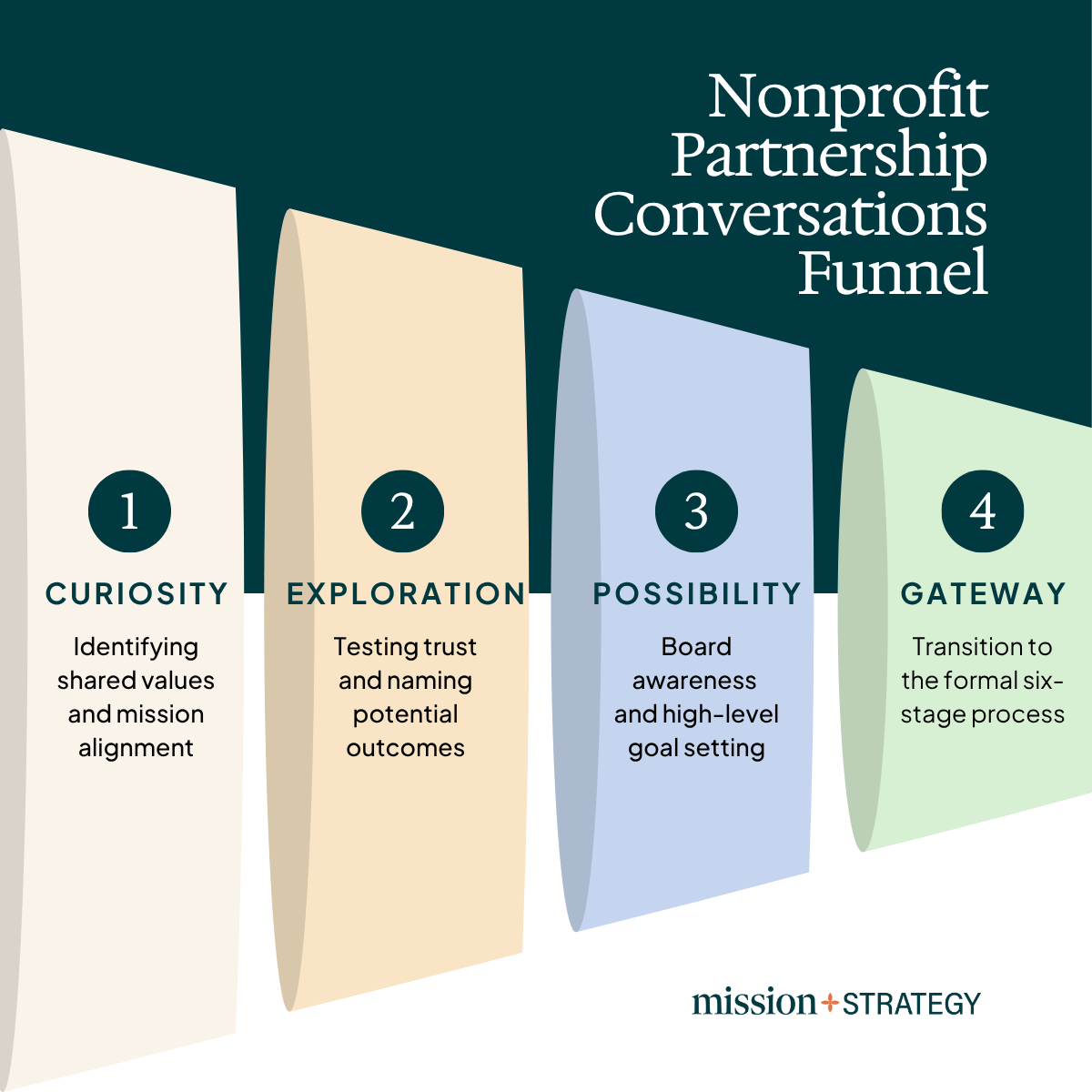
Most merger stories do not begin in a boardroom. They begin with a simple invitation to talk. A coffee. A call. A quiet question that tests interest and trust. Before organizations step into a formal nonprofit partnership or move along any six-stage roadmap, leaders have to decide whether it is even worth exploring the possibility together.
That early decision happens person to person. It is low pressure, curious, and grounded in mission. The nonprofit sector needs more of these conversations because they create the conditions for strategic nonprofit collaboration without forcing a foregone conclusion.
The 2016 Mergers as a Strategy for Success study shows why these early conversations matter. Across 25 Chicago area mergers, four patterns stand out:
Most mergers were motivated by mission-oriented growth rather than crisis.
The majority of organizations had prior relationships before the merger.
In most cases, the acquired organization initiated the discussion.
Trust and cultural fit were central to long term success. Leaders need safe spaces to compare values and ask careful questions long before a term sheet exists.
What Makes the First Partnership Conversation Work
Early outreach should feel different from negotiations. It is exploratory and honest. Leaders who guide organizations through restructuring often encourage executives to treat the first step as a low-pressure meeting. It can begin as simply as asking a colleague if they would like to talk about deepening the relationship.
The goal is not to sell a merger; the goal is to discover whether there is shared curiosity and enough trust to keep talking. Two practical moves help that first meeting land well:
Name the intent without naming the structure. You can say you want to explore ways to expand impact. You do not have to define whether that becomes shared services, an alliance or a formal merger. This keeps attention on mission and people rather than legal forms.
Invite the other leader’s perspective early. Ask what they see on the horizon and what feels possible. Since 60 percent of the 2016 cases were initiated by the organization that would eventually be acquired, your colleague may already be weighing options.
How Leaders Prepare for Sustained Nonprofit Collaboration
Effective conversations begin with internal clarity. The study’s Ten Keys to Merger Success start with trust and mission alignment. Leaders who do their homework show up with a grounded sense of their own non-negotiables and their genuine hopes for impact. That preparation includes:
Mission and Outcomes Clarity: Be able to answer why a deeper nonprofit partnership could produce more mission, not just more scale.
Self-Assessment: Know your strengths, liabilities and cultural realities. Bring an honest view of where cultural differences might require care.
Leadership and Board Readiness: Research finds that CEO transitions frequently create openings to discuss partnership. A productive conversation is easier when your board knows that exploration is on the table.
A Mindset of Curiosity: Not every conversation needs to lead to a merger. The field benefits when leaders normalize exploration without attaching stigma to the outcome.
Listening for the Right Signals in the Nonprofit Merger Process
In those first few meetings, you are not seeking a commitment. You are listening for signals that a long form exploration could be worth the time. The 2016 study suggests watching for:
A Shared Mission Argument: Can both leaders state in plain language how working together could serve people better?
Cultural Compatibility: Do decision making styles align? The study is unequivocal that culture and trust are decisive factors.
Early Candor: Strong partners disclose liabilities and legacy obligations early. Leaders who surfaced tough issues at the start increased the quality of subsequent negotiations.
Board Engagement Potential: If board chairs can become informed champions, the path is smoother.
A Real-World Example: Walking the Talk
One example of how these conversations unfold comes from the origins of Mission + Strategy as it exists today. In 2022, Jean Butzen participated on a panel with Greg Petersen, CEO of Keystone Alliance. Following the panel, Greg invited Jean to meet for coffee.
The meeting was low pressure. They talked openly about their organizations and the increasing need for trusted support for nonprofits. Jean was preparing for retirement and wanted the work of Mission + Strategy to continue; Keystone Alliance saw the potential to expand that work.
From that simple conversation, the two organizations entered into deeper exploration. Over time, they moved forward using an asset transfer model in which Keystone Alliance acquired Mission + Strategy. The process mirrored exactly what we advise: it began with curiosity and a conversation focused on mission. Mission + Strategy does not only advise on nonprofit partnerships; we have lived the experience.
Common Questions for the First Three Meetings
Meeting One: Exploration
Where do our missions and strategies intersect?
What outcomes would matter to us if we worked more closely?
Are there any immediate red flags in culture or values?
Meeting Two: Possibilities
What could we do together that we cannot do alone?
How would our stakeholders benefit from a closer relationship?
What are the non-negotiables for our boards or staff?
Meeting Three: Readiness
What are the biggest "must-haves" for a combined culture to feel like home for both teams?
Are our boards ready to authorize a formal due diligence process?
What is the one thing that, if left unaddressed, could keep this from moving forward?
Frequently Asked Questions About Navigating the First Nonprofit Partnership Conversation
-
Lead with mission-oriented growth rather than financial need. Frame the conversation around what you could achieve together that you cannot do alone. By focusing on expanded impact or deeper service delivery, you position the talk as a strategic opportunity rather than a sign of distress.
-
While the first "coffee meeting" is often leader-to-leader, you should inform your Board Chair early that you are exploring possibilities. Board engagement is a decisive factor in long-term success; having key members as informed champions from the start prevents momentum from stalling later.
-
Normalization of exploration means accepting that not every conversation leads to a partnership. If there isn’t a match, you have still strengthened a professional relationship and gained clarity on your own organization’s non-negotiables. The goal is a "smart" collaboration, not a "forced" one.
-
Not at all. The early stage is about curiosity and testing trust. You are naming the intent to explore deeper relationships without committing to a specific legal structure like an asset transfer or a full merger.
Ready to start the conversation?
If you are weighing the possibility of a new partnership, we welcome you to schedule a discovery call to explore how to navigate these early steps with clarity and confidence.

Together, we are stronger.
If you’re interested in strategic partnerships or balancing your mission and business strategies, we’re here to help.

Mission + Strategy is an invested thought partner to your nonprofit organization. Through our Strategic Advising, Mergers & Partnerships, and Shared Back Office service solutions, we help nonprofits achieve alignment between their mission and business strategies.