Make Your Strategic Plan Work: Build Routines That Turn Strategy Into Daily Practice
Strategic planning is often misunderstood. It is not a document or a moment in time; it is a process that brings people together to reconnect with purpose, reflect on what the future requires, and chart a path toward meaningful mission impact. When done well, nonprofit strategic planning helps an organization move from intention to aligned action. It becomes a shared map that leaders and teams can return to whenever complexity rises or conditions change.
Strategic plan implementation is where planning becomes practice. It is also where organizations begin to see the real return on their investment. When teams think about implementation early, stay rooted in purpose, and build healthy habits around progress and communication, strategy becomes something people use, not something they file away.
Begin Implementation While You Are Still Planning
Implementation begins during planning, not after. As teams explore identity, mission, vision, and values, they naturally raise questions about what needs to happen next. They talk about what success looks like, what will need attention, and how they can stay focused as conditions shift.
These conversations begin to set the stage for follow-through. They help people imagine how progress might be measured and how decisions will stay aligned with long-term goals. As planning unfolds, early discussions about routines and accountability frameworks help ensure the strategy will have a natural place in daily work once it is complete.
Create Focus Through Thoughtful Prioritization
Ideas are rarely in short supply. The challenge is choosing what matters most. Strategic prioritization brings clarity to complex environments and provides direction after the planning phase ends.
A helpful way to begin is by identifying:
Key strengths to build upon
Internal challenges that need attention
Opportunities worth pursuing
Risks that require monitoring
Thoughtful reflection on these areas helps teams see patterns that influence future direction.
Once these themes surface, groups can explore how each one connects to potential priorities. This kind of structured dialogue encourages people to build on shared understanding and expand their thinking. Over time, clear strategic priorities begin to take shape through conversation and collective insight. This is the point where a plan starts to become actionable.
Strengthen Implementation with Strategic Thinking Habits
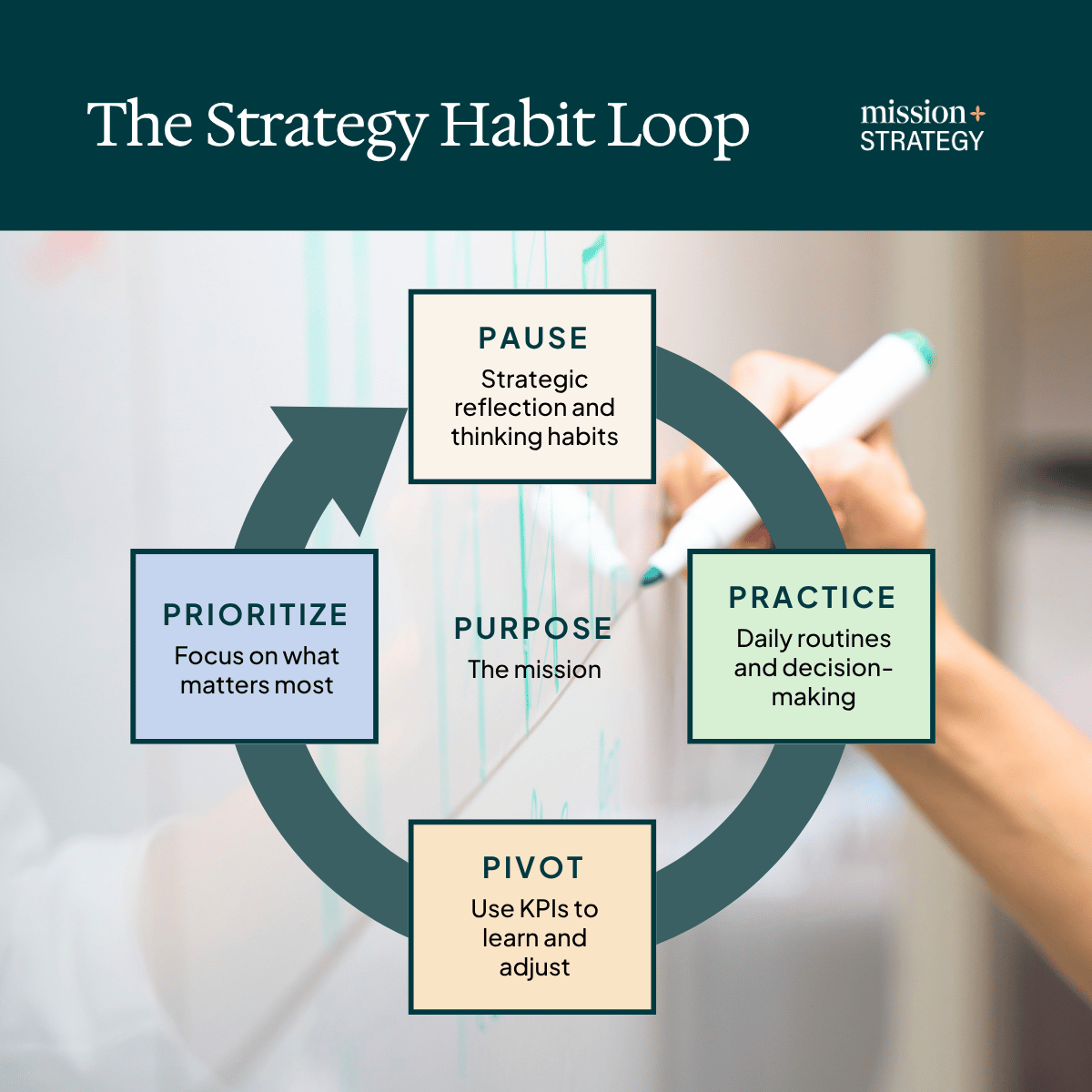
Strategic plans come to life when leaders develop habits that support long-term thinking. Strategic thinking is not a special meeting or annual retreat. It is a routine practice of stepping back, assessing the broader landscape, and reconnecting with purpose.
Leaders strengthen this habit by building time for reflection, asking what success looks like, and pausing before reacting. They consider what obstacles may get in the way and return to the mission to guide decisions. These small shifts help the organization maintain alignment between daily actions and long-term goals.
When strategic thinking becomes part of leadership routines, implementation feels more natural. The plan becomes less of an external guide and more of a shared mindset.
Build Simple Nonprofit Leadership Routines That Keep Strategy Visible
The heart of successful implementation lies in simple routines. Routines provide structure without adding complexity. They help teams stay engaged with the plan and support nonprofit accountability without punishment.
Examples of effective routines include:
Regular check-ins that connect work to strategic direction. Teams pause to review progress, surface challenges, and reorient.
Clear ownership of priorities. Assigning responsibility for key focus areas ensures movement. When someone knows they are stewarding a priority, momentum grows.
Documenting decisions and next steps. Recording decisions creates continuity and reduces confusion.
Using visible indicators of progress. Simple metrics or markers help people understand whether they are moving in the right direction.
Keep Communication Open to Maintain Alignment
Implementation succeeds when communication remains open and steady. During planning, conversations build trust and shared meaning. Maintaining that openness during implementation helps the plan stay relevant.
Regular updates invite people to stay connected to the work. Sharing lessons learned and adjustments builds transparency. Checking in with staff and board members reinforces shared ownership. This communication keeps the plan from becoming static and ensures people stay aligned as circumstances evolve.
Use KPIs as Learning Tools
KPIs (Key Performance Indicators) help teams understand whether their efforts are making an impact. When used well, KPIs support learning rather than pressure. They help organizations learn what is working, identify where adjustments might help, and stay open to continuous improvement.
Developing KPIs early in the planning process helps teams think ahead about what success looks like and how progress will be measured. This clarity supports focus and helps organizations stay connected to their intended outcomes.
Bringing Your Direction to Life
Strategic planning provides direction. Implementation brings that direction to life.
Organizations that prioritize intentionally, build strategic thinking habits, establish simple routines, keep communication open, and use KPIs thoughtfully are better equipped to stay focused and resilient. The plan becomes a living guide. It helps teams navigate change and stay grounded in purpose.
When people feel connected to the work and supported by clear routines, strategy becomes more than a set of goals. It becomes part of the organization’s culture.
Ready to bring your plan to life?
If your organization is ready to strengthen its strategic habits and bring its plan into daily practice, we welcome you to schedule a discovery call. Through our nonprofit strategy consulting services, we would be glad to explore how to support your next steps and help you build the routines that keep your strategy moving forward.

Together, we are stronger.
If you need support with strategic planning or balancing your mission and business strategies, we’re here to help.

Mission + Strategy is an invested thought partner to your nonprofit organization. Through our Strategic Advising, Mergers & Partnerships, and Shared Back Office service solutions, we help nonprofits achieve alignment between their mission and business strategies.