Strategic Planning as a Path to Alignment: How Nonprofits Build Trust, Shared Understanding, and Forward Momentum
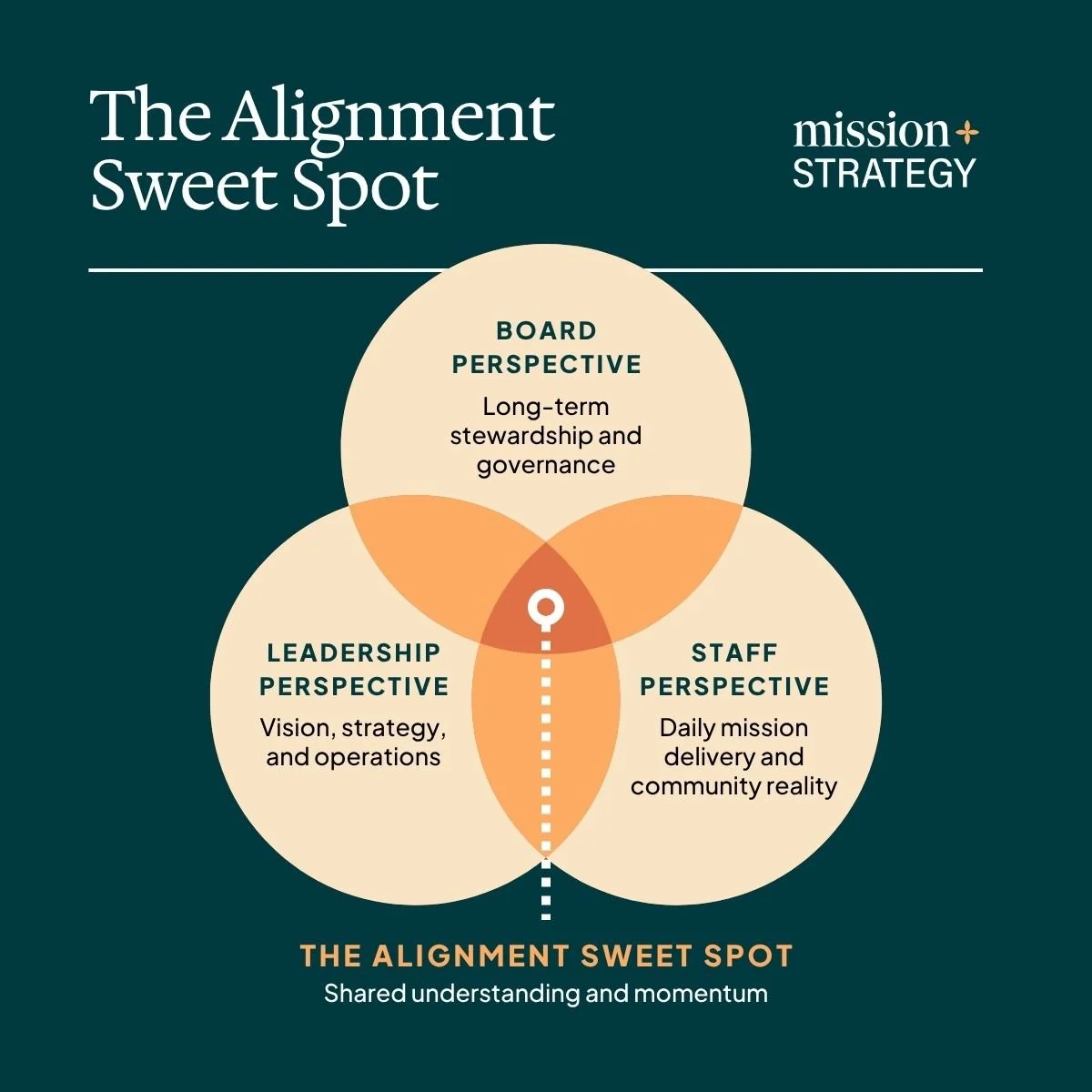
Nonprofits succeed when the people who guide the mission understand one another, trust one another and move in the same direction. Yet in many organizations, staff, leadership and board members experience the mission from different vantage points. Staff live the day to day reality. Leadership connects vision to operations. Boards hold long term stewardship.
Each group sees something essential. Each group holds knowledge that others may not. Nonprofit board and staff alignment is rarely accidental; it is cultivated. Strategic planning is one of those rare moments when these disparate perspectives come together to create a shared organizational vision.
Strategic Planning is an Alignment Opportunity in Disguise
Planning is often undertaken to set direction, but its true power comes from the conversations it makes possible. It creates a structured space where people revisit purpose and make sense of a changing environment together.
Because the process invites many voices, it naturally becomes a place for stakeholder engagement. People begin to see the work through one another’s eyes. They build empathy and create a shared foundation for decision making. This alignment is especially vital in times of complexity. When change accelerates, organizations benefit most when staff and board members have a common view of purpose.
Why Alignment Matters More Than Ever
Nonprofits today face shifting community needs and competing priorities. In these moments, alignment is more than a nice to have; it is a stabilizing force. When everyone is connected around mission, vision and values, organizations navigate decisions with more confidence.
Planning becomes the place where people step back from urgency and reconnect with what the organization stands for. This clarity builds the resilience needed to survive external pressures.
Alignment Begins with Understanding Lived Experience
Alignment grows when people have the chance to share how they experience the mission. Board members often see the long arc of the journey while staff experience daily successes and challenges.
Storytelling brings these perspectives together. When people describe moments when the organization was at its best, they reveal the culture when it is thriving. These stories illuminate identity and help the group understand the organization from multiple angles, which strengthens shared meaning. This understanding becomes the bedrock for the strategic direction that follows.
Values Come into Focus Through Honest Reflection
Values can unify a group, but only when they reflect real behaviors. Many organizations find a gap between the values they list on paper and the lived values their culture reinforces.
By reflecting on unwritten rules and recurring stories, teams reveal what they truly value in practice. This process also invites people to consider their own personal values. Alignment grows when individuals can see where their personal beliefs fit alongside the organization’s goals. When teams acknowledge this human reality, it becomes easier to work toward a shared direction.
Mission and Vision: Shaped or Affirmed Together
While mission and vision statements guide the strategic planning process, their meaning deepens when they are shaped collectively. Collaborative reflection allows staff and board members to consider whether the mission still reflects the heart of the work.
When everyone feels connected to the future, alignment becomes easier to sustain. It ensures that the mission resonates across every level of the organization, from the front lines to the boardroom.
Shared Environmental Awareness Strengthens Choices
Nonprofits operate within shifting landscapes of funding, policy and community needs. Strategic planning helps teams build a shared understanding of these realities.
Reflecting on strengths, challenges, opportunities and risks (often called environmental scanning) ensures that future decisions are grounded in a balanced perspective. When the environment is understood collectively, priorities become clearer and carry greater ownership.
Alignment is the Lasting Impact of Planning
A strategic plan offers direction, but alignment is what makes that direction achievable. When staff, leaders and board members understand one another, the organization gains a strength that lasts long after the planning ends.
Alignment supports better decisions and strengthens relationships. It builds a culture where people listen generously. In this way, planning becomes more than a means to generate a document; it is an opportunity to weave people together around a common purpose.
Ready to build alignment within your team?
If your organization is ready to explore how strategic planning can strengthen your future, we welcome you to schedule a discovery call.

Together, we are stronger.
If you need support in strategic planning, organizational alignment, or in balancing your mission and business strategies, we’re here to help.

Mission + Strategy is an invested thought partner to your nonprofit organization. Through our Strategic Advising, Mergers & Partnerships, and Shared Back Office service solutions, we help nonprofits achieve alignment between their mission and business strategies.