The Nonprofit Strategic Planning Blueprint: A Human-Centered Path from Purpose to Action
Strategic planning is often misunderstood. It is not a document or a moment in time; it is a process that brings people together to reconnect with purpose, reflect on what the future requires, and chart a path toward meaningful mission impact. When done well, nonprofit strategic planning helps an organization move from intention to aligned action. It becomes a shared map that leaders and teams can return to whenever complexity rises or conditions change.
At Mission + Strategy, we approach the strategic planning process as a deeply human practice. Strategy succeeds when it reflects the lived experience of the organization and the aspirations of the people who carry its mission forward. This is why a human-centered path is essential. It creates clarity, builds connection, and strengthens the organization from the inside out.
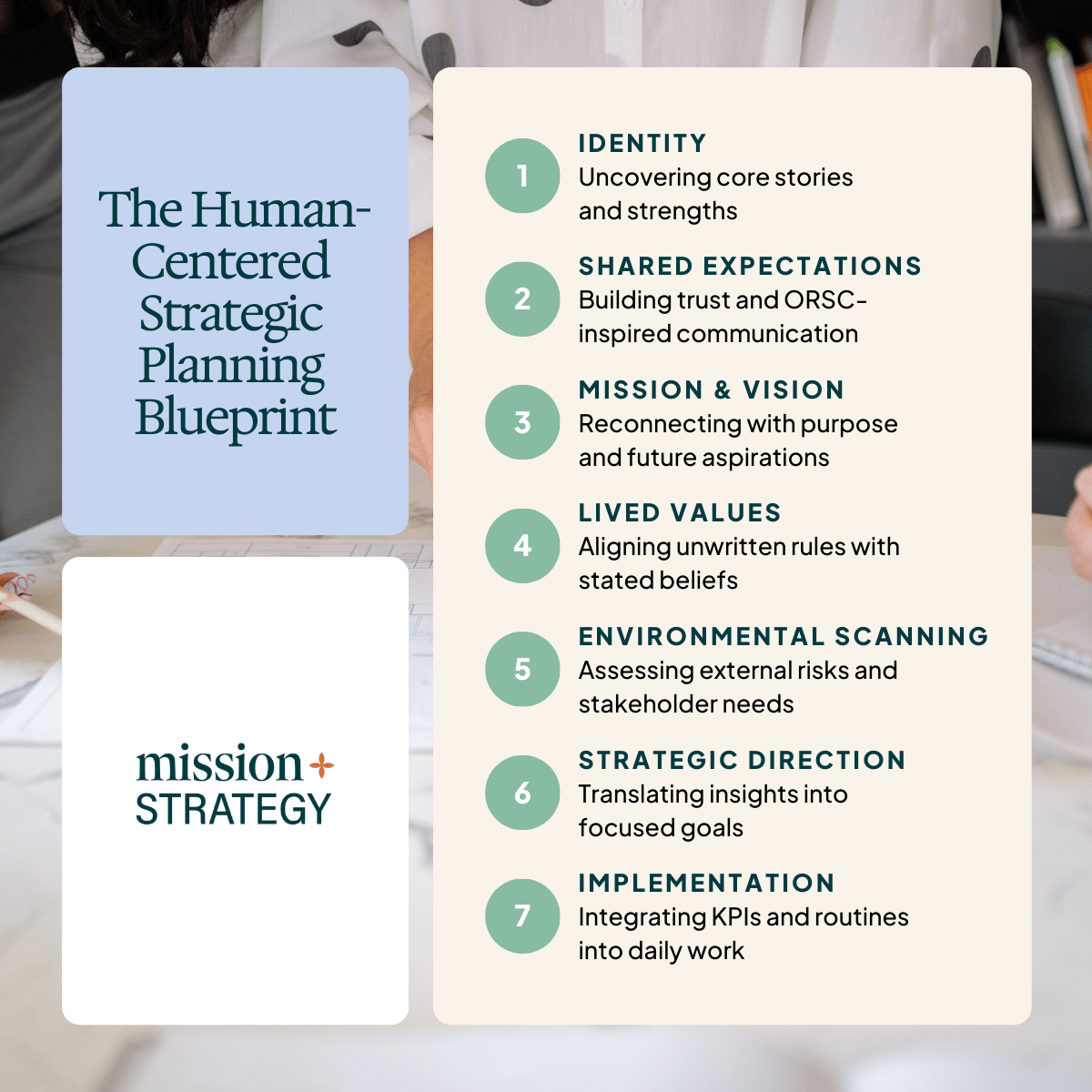
1. Start with Identity Before Shaping Your Strategy
The strongest plans begin with understanding who the organization is at its core. That identity lives in the stories people tell about moments when the organization was at its best. When staff and board members share experiences that made them proud, or describe moments when the mission came alive in unexpected ways, powerful themes often emerge. These stories reveal strengths, patterns of behavior, and cultural markers that define how the organization shows up in the world.
Focusing first on identity creates a foundation that is real and grounded. It lets people see themselves in the future strategy because the process honors what already makes the organization strong.
2. Explore How People Work Together and Set Shared Expectations
Once identity surfaces, it becomes important to explore how the organization wants to work together as it plans for the future. Establishing shared expectations supports openness and trust, and it helps people navigate difficult conversations with clarity and respect.
In our work, ORSC-inspired approaches encourage participants to reflect on how they want to communicate, listen, and engage as a group. These agreements lay the foundation for deeper work to come. This step reinforces a key truth: strategy is not just about decisions; it is about relationships. When people feel safe to speak honestly and listen generously, the planning process becomes far more meaningful.
3. Reflect on Mission and Envision the Future
With identity and expectations in place, the organization is ready to look at its mission and vision with fresh eyes. Mission describes why the organization exists; it is the heartbeat behind every decision. Vision describes the future the organization is striving toward—it should be clear enough to guide and inspiring enough to motivate.
This reflection helps the group reconnect with purpose. It also ensures the organization can articulate a future state that feels both grounded and aspirational.
4. Clarify Values by Naming What Truly Matters
Many organizations have stated values, but strategic planning asks a deeper question: what values are genuinely lived, and what values does the organization want to strengthen as it moves forward?
Teams surface this insight by examining their culture. They explore:
Unwritten rules and recurring stories.
Expectations around success and achievement.
Beliefs that shape how they respond to setbacks.
Through this reflection, people begin to see the difference between the values the organization names and the ones that show up in how people communicate and make decisions. As the group prioritizes these values, the result is a set of principles that feels authentic and relevant to the future.
5. Environmental Scanning: Understanding the External Landscape
Once identity, mission, vision, and values are clear, the organization is ready to look outward and inward with a broader lens. Environmental scanning helps teams understand their strengths, vulnerabilities, opportunities, and risks. This is not simply a technical exercise. It requires curiosity and stakeholder engagement, and an honest assessment of internal realities.
Understanding the environment offers a more accurate picture of what the organization must pay attention to. It becomes the bridge between reflection and strategy.
6. Translate Insight into Focused Strategic Direction
After building a shared understanding of the environment, the group begins shaping the strategic direction. As people compare themes, insights, and observations, priorities begin to take shape.
The question becomes: what matters most for the organization to focus on in this moment? Through collective sense-making, teams identify where their strengths can drive greater impact and which opportunities should guide the next chapter. These conversations lead naturally toward strategic goals—broad outcomes that offer direction without limiting creativity.
7. Prepare for Implementation from the Very Beginning
A strategic plan only creates impact when it changes behavior. This is why implementation begins long before the plan is written. As goals start to take shape, the organization considers how progress will be measured, how decisions will be made, and how leadership will maintain focus over time.
Clear KPIs (Key Performance Indicators), simple management routines, and practices that keep strategy visible help ensure the plan becomes part of everyday work. Without these structures, strategic plans tend to fade. With them, organizations build resilience and alignment as the environment evolves.
A Human-Centered Planning Process for a Stronger Future
Strategic planning is most effective when it honors the people who lead and shape the mission. It invites reflection, encourages curiosity, and strengthens relationships.
At Mission + Strategy, we believe strategy grows stronger when it is co-created. If you would like to begin a conversation about planning for your organization’s future, we welcome you to schedule a discovery call.

Together, we are stronger.
If you need support with strategic planning or balancing your mission and business strategies, we’re here to help.

Mission + Strategy is an invested thought partner to your nonprofit organization. Through our Strategic Advising, Mergers & Partnerships, and Shared Back Office service solutions, we help nonprofits achieve alignment between their mission and business strategies.