Finding the Right Fit: How to Evaluate a Nonprofit Collaboration

In the world of nonprofit collaboration, alignment matters. A lot. Even the most promising partnership can falter if the organizations involved aren’t aligned on mission, culture, or capacity.
Evaluating potential partners isn’t just a due diligence task, it’s a strategic conversation. At Mission + Strategy, we help organizations assess nonprofit collaboration opportunities thoughtfully. If you are wondering how to choose a nonprofit partner, it isn’t about finding "perfection," it’s about finding the right fit for your mission.
Start with Dialogue, Not Decisions
Evaluation is a conversation, not a verdict. The goal is to create space for honest dialogue and build a shared understanding.
Using a structured nonprofit collaboration framework for leaders helps ensure that the goal remains impact, not just "checking boxes."
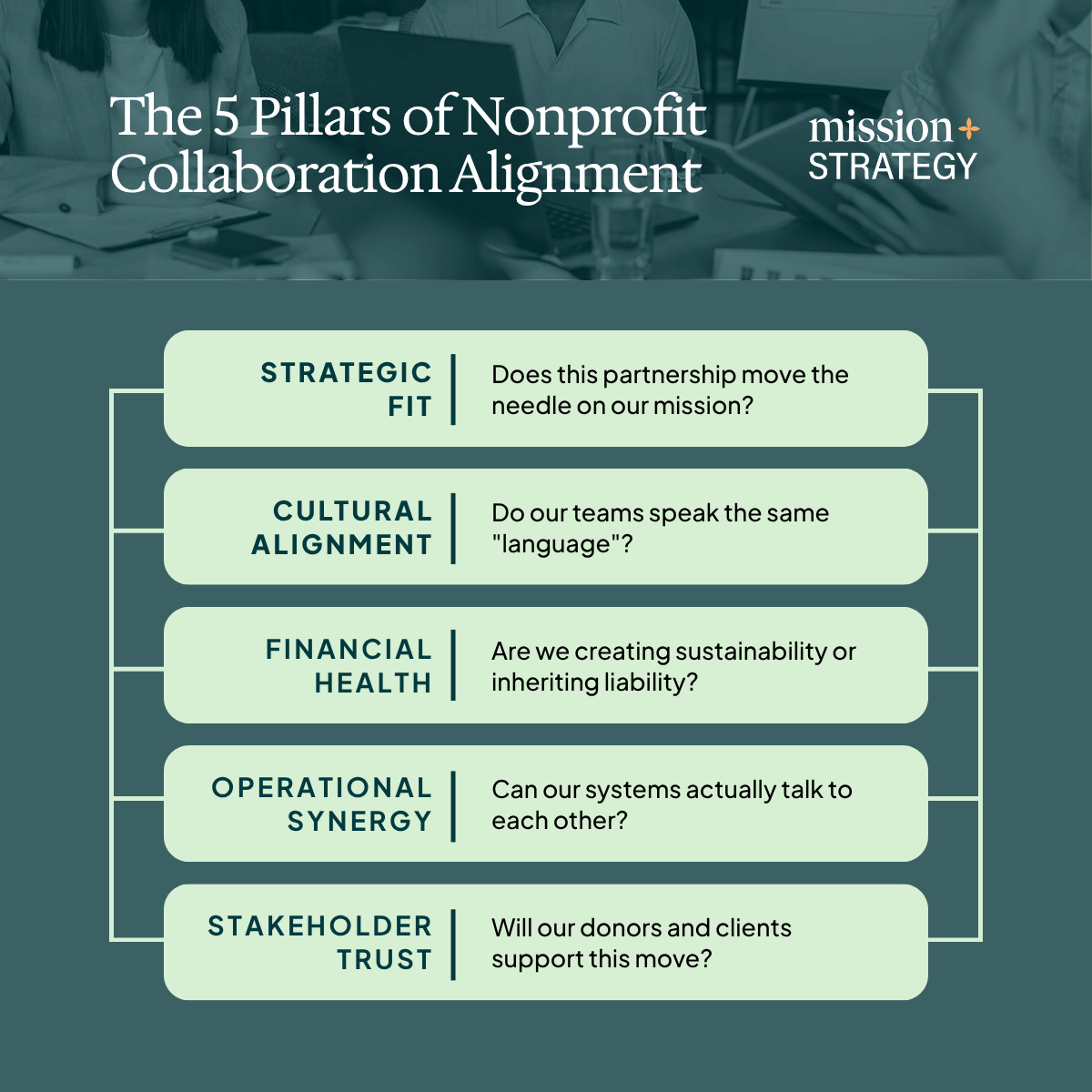
1. Strategic Fit
When evaluating fit, leaders should consider how well a potential partner aligns with their long-term goals. One of the primary benefits of strategic nonprofit partnerships is the ability to address critical challenges or expand impact in ways that a single organization cannot do alone.
2. Cultural Alignment
Cultural alignment is the backbone of success. This is especially true when evaluating cultural alignment in nonprofit mergers or long-term joint ventures. Explore whether your organizations share similar values and leadership philosophies to avoid friction later.
3. Financial Implications
Financial health is critical. Leaders should assess potential cost savings and operational efficiencies while identifying any hidden liabilities. A promising nonprofit collaboration might open doors to new funding, but you must weigh these against the upfront costs of integration.
4. Operational Synergies
To enhance effectiveness, look for opportunities to streamline systems. Consider how well your operations complement each other in practice and be aware of differences in software or processes that could cause service disruptions.
5. Stakeholder Impact
Understand how your staff, clients, and donors will be affected. A well-aligned nonprofit collaboration should enhance service delivery. Develop a clear communication plan to engage stakeholders throughout the transition to maintain trust.
It’s Okay to Walk Away
Not every nonprofit collaboration is meant to be. The evaluation process is valuable even if it leads to a “no.” It helps clarify your priorities and prepares you for future opportunities.
Frequently Asked Questions
-
It ensures shared values drive the partnership, reducing friction and improving staff morale during integration.
-
Common risks include mission drift, hidden financial liabilities, and operational disruptions that can impact service delivery.
-
If the evaluation surfaces deep-seated differences in priorities or a lack of transparency, it is better to pause or end the conversation before formalizing the partnership.

Together, we are stronger.
If you’re interested in nonprofit collaboration or balancing your mission and business strategies, we’re here to help.

Mission + Strategy is an invested thought partner to your nonprofit organization. Through our Strategic Advising, Mergers & Partnerships, and Shared Back Office service solutions, we help nonprofits achieve alignment between their mission and business strategies.